

What Do Athletes Soak In? Ice vs Warm vs Contrast

What athletes soak in comes down to three things: cold water, hot water, or the two back to back. That's the whole menu, from an NBA training room to a BJJ blue belt's bathtub on a Tuesday night.
You rolled twelve rounds. Your shins are raw and your grip's gone. You're stiff before you're off the mat. Ice-bath clips are everywhere, the guy at your gym won't stop talking about his cold plunge, and you typed the question half-curious, half-skeptical. Good instinct. Most of what gets sold as recovery is a feeling with a price tag on it. Some of it earns the money anyway. Here's the map.
What do athletes actually soak in?
Three camps. Cold water to blunt how bad you feel right now. Warm water to loosen up and switch off at night. Contrast, which is hot and cold alternated, for people who like doing it and don't mind that the evidence is thin. Pros split across all three, and most of them pick by feel, not by study. Walk through what each one really does.
What does an ice bath actually do?
Cold water does two plain things. It drops the temperature of the tissue near the surface, and it clamps your blood vessels shut. You go numb, the area feels tight, and the ache backs off while you're in there and for a while after.
Does that add up to real recovery? Sort of. A 2012 Cochrane review pooled the cold-water-immersion studies and found it does lower how sore people feel a day or two after hard exercise, compared to doing nothing. The catch: the effect was modest, and the review flagged that most of the research was low quality. So the soreness relief is real, and it's smaller than the internet makes it sound.
There's a bigger catch if you lift. A 2015 study by Roberts and colleagues in the Journal of Physiology had men cold-plunge after strength sessions for twelve weeks. The ice group built less muscle and less strength than the group that did light active recovery instead. Cold right after lifting appears to mute the exact signal that tells the muscle to grow. It's one line of research, mostly about size and strength, but it's a real finding and worth knowing before you make ice a habit.
So when does ice make sense? When feeling ready right now beats building anything. A tournament with three more matches today. A hard in-season stretch where the next game matters more than next month's gains. A brutal outdoor session in the heat. In those windows, numb it and move on.
What is a warm soak for?
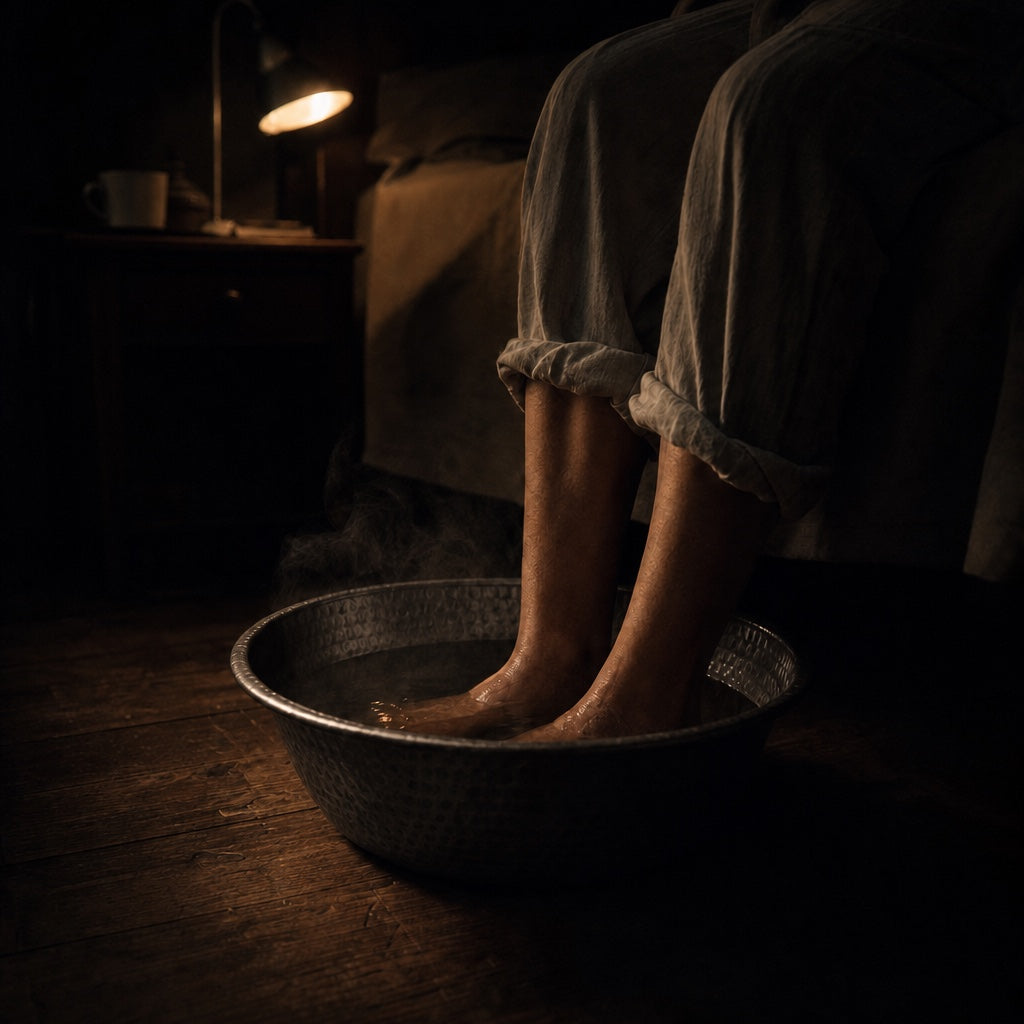
Warm water does the opposite of cold. It opens your blood vessels instead of clamping them. Sit in water around 40 to 42°C and blood flow to the limb climbs, roughly half again above resting at the low end and higher the hotter and longer you go. Stiff ankles and beat-up feet loosen. The tight, wired feeling after a hard session settles.
Here's the part nobody selling a four-thousand-dollar plunge tub wants to say out loud. Most of what feels good about a warm soak is the warmth itself and the fact that you're sitting still for fifteen minutes with your phone face-down. That's not a knock. That felt effect and that forced stop are most of the reason to do it, and for a stiff, over-caffeinated evening they're plenty. This is the ice bath vs hot bath recovery question people actually mean: not which one heals you faster, but which one you'll look forward to. Warm wins that on a weeknight.
Does contrast (hot then cold) do anything?
Contrast means alternating. A few minutes in hot water, a short plunge in cold, repeat three or four rounds, usually finishing on cold. Athletes have done it for decades and plenty swear by it.
The evidence is mixed, and the researchers who run these trials say so plainly. The trials that have tested it disagree with each other. Some put contrast about level with a plain cold plunge for next-day soreness. Others find no real edge over just resting. Nobody has a clean reason why the switching would beat either temperature on its own. If you like it and you'll keep doing it, it's fine. Just don't believe it's doing something special a hot or cold soak isn't.
Why soak your feet instead of the whole tub?
Here's where the pro setup and your setup part ways. The locker-room version needs a cold plunge, a chest freezer full of ice, or a dedicated tub. That's money and space most people training after work don't have.
Your feet and lower legs take the worst of it anyway: mat time, leg day, hours on your feet. A foot soak puts heat exactly where you're wrecked without filling a bathtub or buying hardware. A basin under the hot tap. Fifteen minutes on the couch. That's the version that actually happens on a Tuesday, which is the only version that counts. If you want the full walkthrough, the foot soak for men piece covers temperature, time, and what to skip.
What should you put in the water?
Plain hot water already does the main job. Everything you add is about the feel, not a hidden mechanism. Worth knowing before you spend on anything fancy.
Epsom salt is the default add. It's magnesium sulfate, and the pitch is that the magnesium soaks into your muscles. It doesn't. Magnesium doesn't cross skin in any meaningful amount, which the does magnesium absorb through skin piece runs through in full. Epsom still softens the water and changes how a soak feels, which is a fair reason to like it, just not the one printed on the bag. The matchup people search is ice bath vs epsom salt bath, as if it's one or the other. It isn't. One's a water temperature. The other's a thing you toss in warm water. Whether epsom earns its spot is its own question, covered in does epsom salt actually work.
Menthol is the one add that changes what you can feel. Drop menthol in warm water and a cool wave comes up through the heat in about three minutes. You feel it. That's not a recovery claim, it's a sensation, and it's the thing that makes a plain soak feel like it's working. An athlete recovery soak lives or dies on that felt cue.
Now the part I'll say plainly. No soak builds muscle. Ours included. No soak erases a hard session or replaces the work your body does while you sleep and eat, and that's where actual recovery happens. A soak is the fifteen minutes that makes the evening usable: the stiffness off, the head down, ready to sleep. Sold as that, it's honest. Sold as more, it's the same oversell you were skeptical about walking in.
Which soak, when?
Skip the theory. Here's the call for the situations that come up most.
- Sharp, fresh soreness and you compete again in hours. Cold or cool water. Numb it, get through the day, worry about adaptation later.
- Stiff and wired in the evening. Warm water, 40 to 42°C, fifteen minutes. Loosen up and switch off.
- Tournament weekend, matches back to back. Whatever you'll actually keep doing. Contrast if you like it. Consistency beats the perfect protocol.
- Off-season, chasing size or strength, no event soon. Don't ice right after lifting. Warm water or nothing.
One rule under all four: match the water to what tonight is for, not to what a highlight reel told you the pros do.
The heaviest version, for the worst days
If tonight is the day after the worst day, the tournament or the session that actually wrecked you, that's the one time to reach for the strongest thing in the drawer. ANVIL Fight Night is the strongest cooling soak in the line: warm water, a heavy hit of menthol, the cold wave coming up through the heat in about three minutes. It won't rebuild you. It'll make the night after usable, which is the whole job. Fourteen dollars a sachet, and it's the day-after-the-worst-day soak on purpose.
Quick questions
Is an ice bath after lifting good or bad? Depends what you're lifting for. If you need to perform again soon, it helps you feel better now. If you're training to get bigger or stronger, the 2015 Roberts study says regular ice right after your session works against those gains. Off-season, skip it or keep it occasional.
How soon after training should you soak? Whenever you can. There's no magic window. The worst soreness usually lands a day or two after the session, not the night of. Tonight's stiff legs are often Sunday's work catching up. A soak the night of and a soak the next evening both make sense.
Should you soak every day? You can. Daily warm soaking is low-risk and mostly a question of whether it's worth your time. Daily ice is the one to be careful with if you lift, for the adaptation reason above. Most people land on a few warm soaks a week and cold only when they actually need to perform.
Do epsom salts add anything? To the feel, a little: softer water, a scent if it's added. To your muscles through the skin, no. The epsom piece linked above has the full breakdown.