

Does Magnesium Absorb Through Skin? A Straight Answer

You read labels. So you already smell something off about the magnesium story.
So, does magnesium absorb through skin? Short version: no. There is no good evidence that magnesium crosses intact skin in any amount that matters. Skin is a barrier. Keeping things out is its whole job.
The magnesium-flakes pitch says your muscles drink the mineral straight up through the soles of your feet. They don't. Below is what the research actually shows, why the claim won't die, and where ANVIL lands on it. We put magnesium sulfate in our soaks. We're still going to tell you what it does and what it doesn't.
Here it is on one line each.
| The claim | The verdict |
|---|---|
| Magnesium absorbs through intact skin in useful amounts | No credible evidence |
| Trace amounts slip through hair follicles and sweat glands | Possible, but a sliver of your skin. Not meaningful. |
| Oral magnesium from food or pills raises your levels | Yes. This is the route that works. |
| A warm soak feels good and helps you wind down | Yes, but that's the heat, not the mineral. |
Why can't magnesium just soak in?
Look at the outer layer of your skin. It's called the stratum corneum. Flattened dead cells packed in lipids, like brick and mortar. It's built to hold water in and keep the outside world out.
Now look at magnesium in water. It doesn't drift around as a lone atom. It's an ion. That means it carries an electric charge, and it drags a shell of water molecules with it.
Charged and bulky is exactly what a fatty wall blocks. Passive movement through that barrier is close to zero. Your skin gets wet and a little softer in the bath. That is not the same event as magnesium entering your blood.
One more thing people miss. Sweat glands push fluid out. They are not an intake pipe. So the "it goes in through your pores" line has the plumbing backwards.
That's the mechanism problem. It's also why the burden of proof sits on the side claiming absorption, not on you for doubting it.
What about that famous Epsom bath study?
There's one study the whole claim leans on. 2004, University of Birmingham, run by a researcher named Rosemary Waring. People soaked in Epsom baths, and some showed a rise in magnesium in their blood or urine.
Now the parts nobody quotes. It was around 19 participants. It was never peer-reviewed. It was never published in a journal.
Peer review is the basic bar. It means other scientists check your method and your math before anyone treats the result as real. This study never cleared it. It circulated as a write-up, often hosted by companies that sell bath salts.
A small unpublished pilot is a place to start looking. It is not a finding you can bank on. In the twenty years since, nobody has reproduced it at scale. One thin study holding up an entire industry claim tells you how thin the floor is.
Has anyone reviewed all the evidence at once?
Yes. In 2017, Gröber and colleagues published a review in the journal Nutrients. The title says it flat out: "Myth or Reality—Transdermal Magnesium?" They gathered the available studies and weighed them together.
A review like that is stronger than any single trial, because it looks at the whole pile instead of one flattering result. Their read: the evidence does not support meaningful absorption through skin.
Here's the fair nuance, because it matters. They noted that a little magnesium might pass through hair follicles and sweat glands. But those openings cover roughly one percent of your skin's surface, or less. A trace through one percent of the area is not your legs loading up on magnesium.
The newer data points the same way. A 2023 trial by Athavale and colleagues put about 20 people on a magnesium spray for 12 weeks. It recorded no change in their blood magnesium. Small study, clear direction.
So why does everyone still believe it?
Two plain reasons.
The soak feels good. Warm water on beat-up feet is genuinely nice, and your brain files "felt good" under "it worked." The feeling is real. The reason people give for it is wrong. A warm foot bath before bed does help some people wind down. That's the heat and the drop in body temperature afterward, not the magnesium. We got into that in the field note on a foot bath before bed.
The second reason is money. Magnesium flakes cost more than plain Epsom salt. The extra you pay buys the absorption story and nothing else. The label needs the myth to hold up the price tag.
What is magnesium actually good for?
Plenty. It just works from the inside, not through a basin.
Magnesium supports normal muscle and nerve function, and it's genuinely worth getting enough of. The U.S. National Institutes of Health puts the recommended intake for adult men around 400 to 420 mg a day. The same agency notes many people fall short of that from food alone.
Food comes first. Pumpkin seeds, spinach, black beans, almonds. If you think you're low, the move is a blood test and a talk with your doctor or a dietitian. Not a soak. That's the full picture on oral magnesium. Real, useful, and nothing to do with your feet.
Where does ANVIL stand?
Straight up. Our soaks contain magnesium sulfate. That's Epsom salt. It's in there for texture and tradition. It makes the water feel like a real soak. It softens rough skin so the rest of the soak has something to work on.
We are not going to tell you it feeds your muscles through your skin. It doesn't, and we're not selling you a thing we can't back.
What earns its place in a soak is the heat. Heat opens the vessels near the surface and gives you a reason to sit still for ten minutes. In the soaks built around menthol, the cool hit is a sensation you feel land. Plenty of athletes soak after training, and we looked at what they actually put in the water. That's the honest pitch. A warm soak that levels with you about the chemistry.
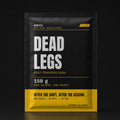
Want the receipts? Our science page lays out every active in the line and what the evidence does and doesn't support. Not sure which soak fits your training or your feet? The two-minute quiz points you to the right one. DEAD LEGS, if your legs are wrecked after a heavy session.
Quick answers
Are magnesium bath flakes a waste of money? As a way to get magnesium into your body, basically yes. They don't beat plain Epsom salt at it, and plain Epsom salt doesn't do it either. As a soak, they're fine. Same experience as Epsom salt at a higher price. We went deeper on whether Epsom salt actually works in its own field note.
Does magnesium oil spray work? Same evidence problem. The tingle people feel isn't magnesium loading into muscle. It's usually irritation from concentrated magnesium chloride sitting on skin. A reaction on the surface, not proof anything went in.
How do I actually raise my magnesium? Food, and if a test shows you're low, an oral supplement your doctor signs off on. Seeds, leafy greens, beans, nuts. A blood test and a professional beat a bath every time.
So soak because it feels good and because ten minutes off your feet is worth it. Just skip the part where the mineral swims into your blood. That part isn't true.