

The Warm Foot Bath Before Bed: The Actual Sleep Science

A warm foot bath before bed does help you fall asleep faster. Not because it relaxes you. Because warming your feet pulls heat out of your core, and the drop in core temperature is the signal your brain uses to start sleep.
You know the night this is for. You trained at nine, or you came off a late shift, and now it's 12:40 and you're flat on your back with your eyes open. Your feet won't settle. Too hot under the blanket, too cold out of it. Your body is done. Your head is still running, and the thumb keeps scrolling.
Here's what's actually going on, and the one thing you can do about it in 15 minutes.
Why does warming your feet make you sleepy?
Your core body temperature isn't flat across the day. It runs a little higher in the late afternoon and starts falling in the evening. That fall is part of what tells your brain the day is over. Sleep onset rides that drop down.
Most people get the next part backwards. To cool the core, your body has to move heat out, and it vents most of it through the skin of your hands and feet. The blood vessels there widen, blood flow climbs, and heat radiates off. Warm feet aren't the enemy of sleep. Warm feet are how your core sheds heat and cools down.
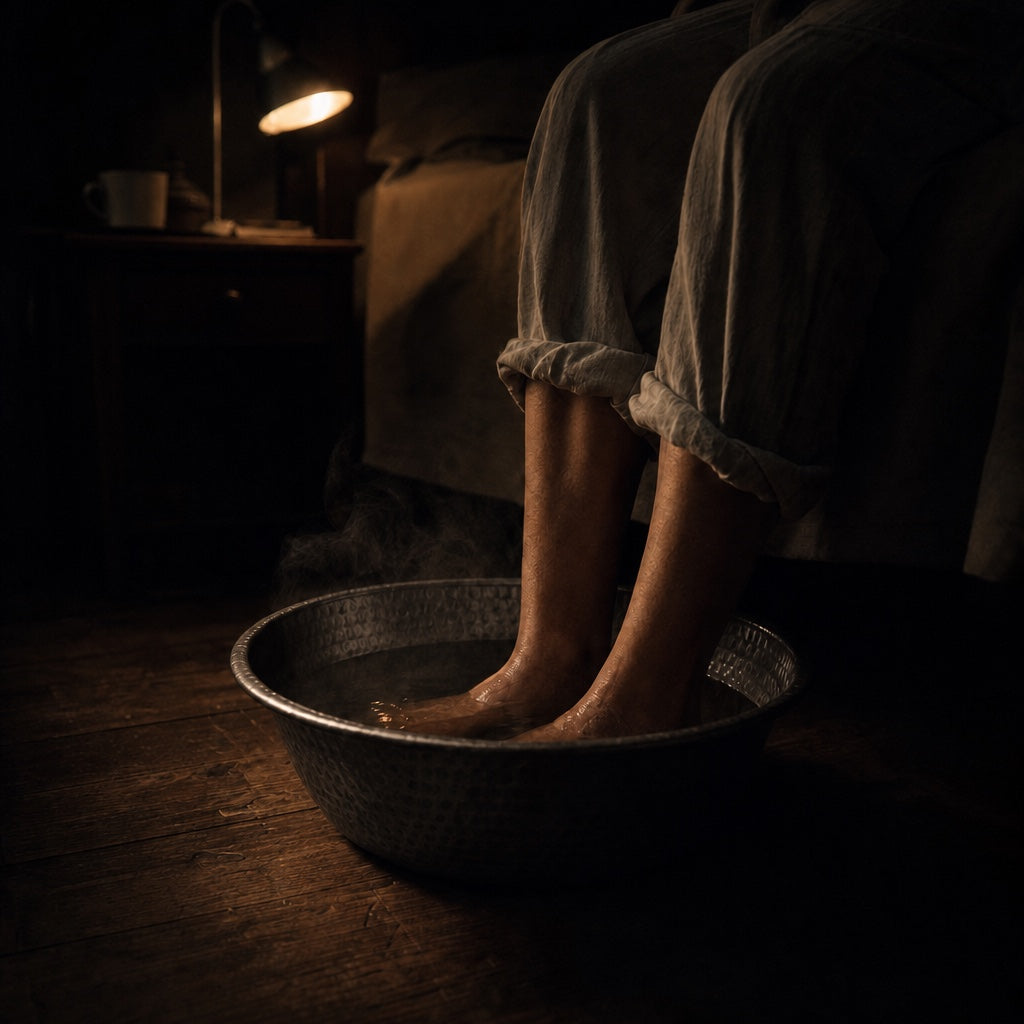
A warm foot bath forces that on purpose. Feet go into 40°C water. The vessels open, and when you take them out the heat pours off fast. Core temperature drops a little sooner than it would have on its own. Your brain reads the drop. You warm the outside to cool the inside.
What does the research actually say?
More than you'd think for something this low-tech.
The strongest evidence is a 2019 systematic review from the University of Texas at Austin, published in Sleep Medicine Reviews by Haghayegh and colleagues. They pooled the water-and-sleep studies and found that a warm bath or shower, around 40 to 42.5°C, taken one to two hours before bed, was linked to falling asleep about ten minutes faster on average. Ten minutes sounds small until you've spent forty of them staring at the ceiling.
One gap worth flagging. Most of those studies used full baths or showers, not foot baths. The foot-bath-only trials are fewer and smaller, mostly small studies in older adults using roughly 40°C footbaths before bed. They point the same way, through the same mechanism. They're also small, so hold them loosely.
There's a sock version too. A 2018 study in the Journal of Physiological Anthropology put socks on people at bedtime and tracked their sleep. The sock-wearers fell asleep about 7.5 minutes faster and slept about 32 minutes longer. The catch is the size: a handful of young men, so treat it as a hint, not a headline. Same idea underneath. Warm the feet, help the heat leave, fall asleep sooner.
For the record, that's a better-evidenced sleep lever than the magnesium story printed on every bath-salt bag. Magnesium doesn't meaningfully soak through your skin, so that isn't what's helping you drift off. We took that one apart here.
How hot, how long, and how early?
Here's the whole protocol on one card.
- Water temperature: about 40 to 42°C. Warm like a hot bath, not scalding. If it's uncomfortable to step into, it's too hot.
- Soak time: 15 minutes. Long enough for the vessels to open, short enough that the water's still warm when you're done.
- When: 60 to 90 minutes before you want to be asleep. You want the heat coming off your feet while you're settling into bed, not while you're still sitting in the water.
- Socks after: if your feet run cold, pull socks on when you step out. It keeps the vessels open and the heat moving, which is the same nudge the sock study was measuring.
New to soaking in general? The plain how-to for a men's foot soak covers the basics. This is just the before-bed version.
A hot shower does the same thing. So why a foot bath?
Straight answer: a warm shower or a full bath does the same job, and the bath studies are the stronger ones. If you'll take a hot shower 90 minutes before bed, take it. That works.
Most guys won't. Not at 10pm, not after they already showered post-training, not when they're half in bed. A foot bath is the version that survives a real night. One basin, 40°C water, feet in, done. You don't undress or wet your hair.
And the 15 minutes is the actual point. It's a hard stop. Your feet are in the water, so the phone goes down, or at least the scroll slows. You've put a gap between the day and the pillow without having to plan one. On a wired night, that gap earns its keep next to the temperature trick.
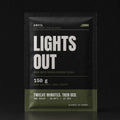
This is where Lights Out fits. It's our pre-bed soak, lavender-forward with cedarwood under it, built to smell like a workshop winding down and not a candle store. Drop the sachet in the warm water and the room goes quiet and warm. The lavender works through your nose, not your skin, so read it as the scent that ends the day, not something that knocks you out.
What the soak actually buys you is a reason to sit for the 15 minutes. Warm feet, quiet head. It won't fall asleep for you. The temperature does the real work. The soak makes the 15 minutes something you'll run again tomorrow.
One basin. 40°C. Feet in. Lights Out is $14.
Common questions
How long before bed, exactly? Sixty to ninety minutes is the window. If all you've got is 30, it still helps, just less. The goal is to have the heat leaving your feet as you get into bed.
Does it work in summer, or if my feet run hot? Yes. The mechanism doesn't care about the season. The warm water still opens the vessels, and your core still sheds heat as they cool. In a hot room you might just skip the socks afterward. One flag: if your feet burn or crawl every single night and you can't hold them still, that's a doctor conversation, not a foot bath.
Can I just wear socks instead? You can, and the sock study says it helps a little. The foot bath is the stronger version, because warm water opens things up faster than body heat alone. Socks are a fine backup on a night you won't fill a basin.
What about the magnesium or Epsom salt in the water? Epsom salt makes it a better soak on the skin, and that's the reason it's in there. It isn't what's helping you sleep, and magnesium doesn't absorb through your skin the way the bags imply. The heat does the sleep work. Whether Epsom does anything at all, we checked.
The trade is simple. Skip it and you're back to 1am, six hours of sleep, and a ten-hour day sitting on top of that. Or you put your feet in warm water for 15 minutes and hand your body the signal it's already waiting for. Tonight's the test. Fill the basin.
We keep the full version of what we claim, and what we don't, on our science page.