

Sore Feet From Work Boots: The Hour After They Come Off

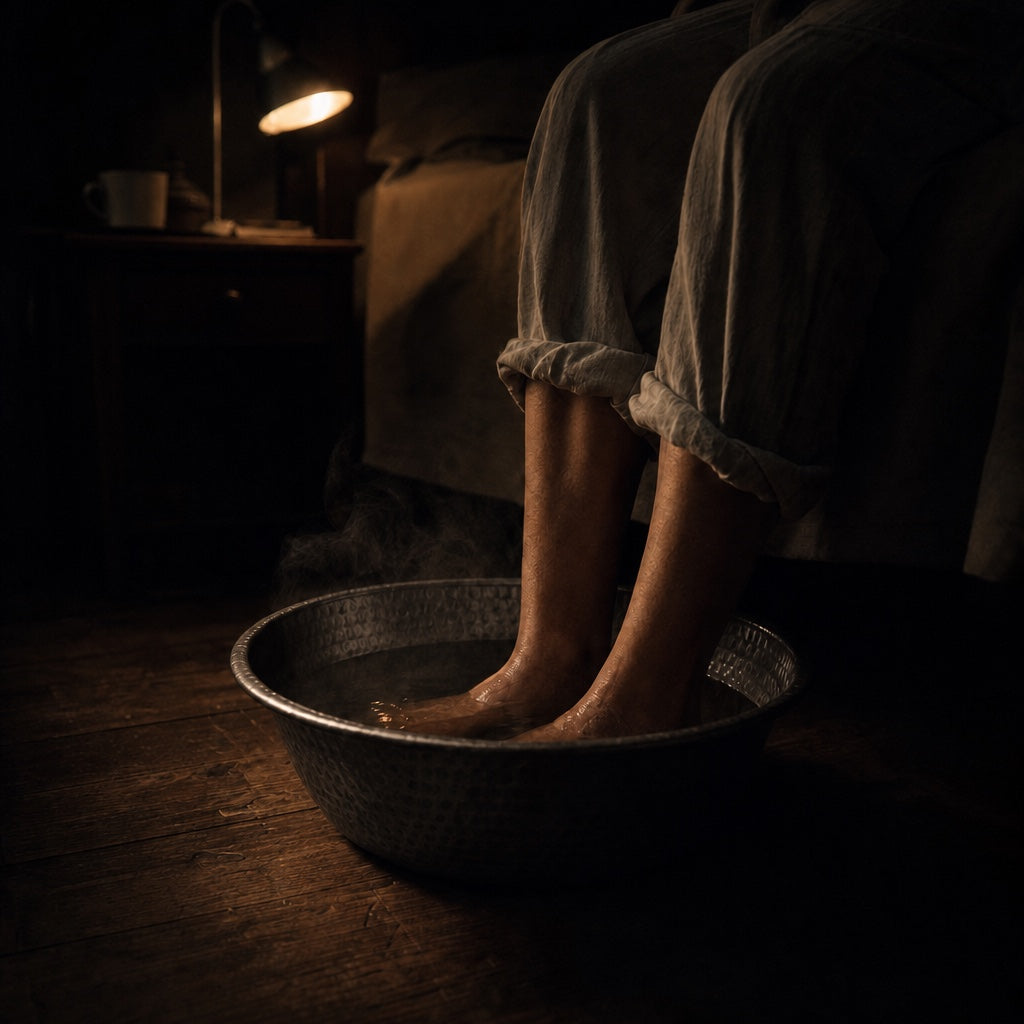
Sore feet from work boots come from ten hours of load, a stiff sole and no room to move. Better boots and a better insole handle part of it. The other part happens at home, and almost nobody writes it down. Hot water at 40 to 42°C, fifteen minutes, up over the ankle, before you sit down for the night.
It's 5:40pm and the boots are off in the hallway. There's a thread on r/Construction titled "Work boots have cooked my feet", which is the most accurate thing anyone in the trades has written about this. Cooked is right. Heat went into those boots at 6:30 this morning and never came back out. Your socks are damp, your arches are flat, and the plan for tonight is to not use your feet again until tomorrow.
Do better boots and insoles actually work?
They handle a real part of it, and anyone who tells you otherwise is selling you something else. Get this half right first.
Fit, before anything. Length and width, measured late in the day when your feet are at their biggest. A boot that fits at 7am and not at 4pm is the wrong boot.
Replace the stock insole. The foam in most safety boots gives up inside a month. Swapping it is the highest-value twenty dollars in the trade.
Two pairs, rotated. A boot needs a full day to dry out, and the same damp pair back to back is half of why Thursday feels worse than Monday.
Real socks. Wool or a wool blend, not cotton. Change them at lunch if you sweat hard.
A mat if you have a fixed station. Anti-fatigue matting earns its money if you stand in one spot.
Search "sore feet from work boots" and every result on the first page is one of those five. There's a thread on r/Construction called "What actually helps with foot pain after standing on concrete all day?" and the answers there are the same five again. They're correct. They're also all prevention inside the boot, aimed at the ten hours you're wearing it. Nobody writes the other half, which starts the second the boots come off.
Why do your feet feel cooked at the end of a shift?
Concrete gives nothing back. Every step, the floor returns all of it into your foot, and you took somewhere north of fifteen thousand of them.
The boot adds to it. A safety boot is built to protect, not to move: a steel or composite toe, a stiff shank, a sole that doesn't bend where your foot wants to. Your foot is held in one shape for ten hours while it carries you around. Blood has to climb back up out of your feet against gravity the whole time, so a little fluid settles down low. That's the tight, heavy feeling when you pull the boots off.
Then there's the actual heat. A sealed boot has nowhere to vent, your foot sweats into a sock, and the damp sock holds that warmth against your skin all day. Cooked is less a metaphor than a description.
None of it is an injury. It's what a foot does under that much load with nowhere to move, and load, heat and time all end at the same moment. That moment is when the boots come off.
What about "you'll get used to it"?
That's the trades' own answer, delivered on every site, usually kindly. It's half true. You do adapt. Your feet toughen up, your gait changes, and somewhere around the six-week mark you stop noticing.
But adapting isn't the same as being fine. There's a thread on r/skilledtrades titled "30 years in the trade and i only sorted my feet two years ago". Twenty-eight years of getting used to it, then two years of actually doing something. That story is common and the boot forums don't tell it, because "you'll get used to it" only works as advice when nobody has a plan B.
Here's the plan B. Fifteen minutes, and you already own most of the equipment.
What do you do in the hour after the boots come off?
| The hour after | What |
|---|---|
| Straight away | Boots and socks off at the door. Both. |
| Fill the basin | Hot-tap hot, 40–42°C, deep enough to cover the ankle bone |
| Fifteen minutes | Feet in, sitting down, phone in the other room |
| Then | Pat dry, including between the toes |
| Then | Dry socks, not today's |
| How often | 2–3 nights a week, or after a day that earned it |
A few notes on that.
Both socks off at the door. Damp cotton against your skin all evening is how you end up with soft, splitting skin between the toes.
Hot-tap hot, not kettle hot. Strong going in, never scalding. If you wouldn't hold your hand under it, it's too hot.
Over the ankle bone. The soak works on whatever the water covers, and your lower shins took some of today too.
Fifteen minutes, sitting. The forced stop is half the point. Plenty of guys in the trades never properly sit down between clock-in and clock-out, and the bucket is what finally makes you.
Any bucket. A mop bucket, a storage tub, the thing you wash the truck with. Deep beats wide, because deep covers more foot. A proper basin is coming, but you don't need to wait for it. The full spec version of this soak is in the foot soak after work.
What is the hot water actually doing?
Three things, and none of them are complicated.
Heat opens the vessels near the skin. Around 42°C, local blood flow in the feet climbs to roughly 1.5 to 1.7 times its resting rate. Your body is pushing warm blood to the surface to shed the heat. Your feet go pink and that tight feeling starts to settle. Plain physiology, and it works whether or not you put anything in the water.
Heat makes tissue less stiff. The foot that was locked into one shape by a steel toe all day gets to change shape again. That alone is most of the fifteen minutes.
And heat softens skin. Callus, hard heel, the thickened stuff along the outside edge: it all gives more easily after a soak than before one. If your heels are the problem, cracked heels in men is the piece to read next.
What should you put in the water?
The heat is doing most of the work, so plain hot water already gets you most of the way. Everything you add is about making the fifteen minutes better, and about making it likelier you come back tomorrow. Cheapest first.
Plain hot water. Free. Works. If you do nothing else from this article, run the hot tap and sit down for fifteen minutes.
A scoop of Epsom salt. It softens the water and turns a chore into something you look forward to. Know what it is, though. Magnesium doesn't meaningfully cross skin in a fifteen-minute soak, from our salt or anyone else's. Epsom is the base and the feel, not muscle recovery in a bag. Full version: does Epsom salt actually work.
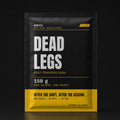
A built recovery soak. This is what we make. DEAD LEGS is dosed with real menthol, and the cold comes up around three minutes in and reads clean over the heat. That's a sensation and we keep it labelled as one. Claiming more would be us overselling a bag of salt. Peppermint and eucalyptus up top, pine and vetiver underneath, so it smells like a treeline instead of a bath aisle. The sachet also does one quiet thing plain water can't: an open box on the counter gets you into the water on nights you'd have skipped.
Start here: the 60-second soak quiz. A few questions about how your feet actually feel at the end of a day, and it points you at the right soak instead of you guessing.
What if you don't want to be the guy who soaks his feet?
Then don't be, on site. Nobody at work needs to know this is happening.
Foot care reads as soft in the trades, mostly because the only version anyone has seen is a salon with a foot spa and a magazine rack. A bucket of hot water in your own hallway at six o'clock isn't that. It's the same category as icing a shoulder or stretching your back out on the floor. Nobody on any crew has given a guy a hard time for either.
The door is shut, the boots are already off, and the only person who knows is you. The payoff shows up as walking normally on Saturday.
After you step out
Pat your feet dry and get between the toes properly. Don't rinse. If your heels are rough or splitting, work a thick cream in now, while the skin is still soft from the water. A proper foot cream is coming and it slots in exactly here. Then dry socks, not the pair you sweated through today.
Tomorrow is the same site, the same concrete, the same boots. The soak changes none of that. What it changes is where you start from: feet that got fifteen minutes off last night, instead of feet still carrying yesterday. Over a few weeks that stops being subtle.
Questions guys actually ask
Hot or cold water after a shift? Hot for the normal end-of-day version: tired, tight, flattened out. Heat loosens tissue and gets blood moving, which is what those feet want. Cold is for a fresh, angry flare-up, like a rolled ankle in the first day or two.
Insoles or the soak, if I only do one? Insoles. They work on all ten hours and the soak works on one. They're not competing for the same job, though, and the soak costs you fifteen minutes you were spending on the couch anyway.
My heel is worst on the first few steps in the morning. Is that the boots? Maybe, and it's also the classic pattern for a specific heel problem with its own treatment path. Hot water won't sort that one out. Get it looked at by a doctor or a physio before it turns into a six-month thing. That pattern responds well to the right plan and badly to waiting.
When should I stop soaking and see someone? If a foot stays swollen, or one is clearly bigger than the other, don't soak it, see a doctor. Same for numbness, pins and needles that don't go when the boots come off, or pain that wakes you at night. Those can be medical, and hot water has nothing to offer them. If you have diabetes or any circulation problem, check with a professional before you start soaking at all.