

The Foot Soak After Work, Done Right

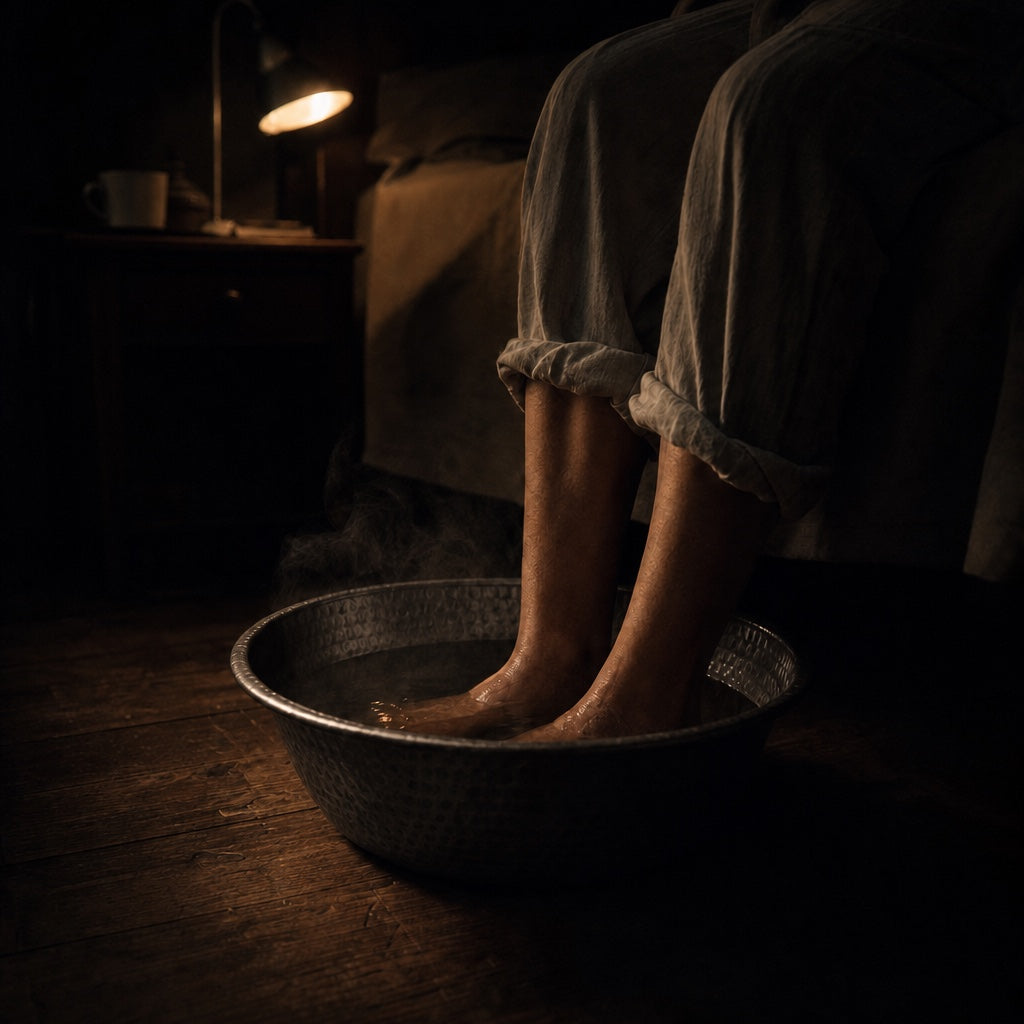
A foot soak after work is hot water at 40 to 42°C, fifteen minutes, filled to your ankle bone. Do it two or three nights a week, and it takes the day off your feet.
It's 6:07pm. The boots are off by the door and your feet are still on the clock. Throbbing. Hot. Flattened out from ten hours on a concrete floor. Maybe it was a ladder all day, maybe a twelve-hour line shift where you sat down twice. You're not going to walk this one off. Sit down and put your feet in hot water. Here's how to do it right.
Why do your feet throb after standing all day?
Standing isn't resting. On a long shift the arch stays loaded and the small muscles of the foot never fully switch off. Your boots make it worse: steel toes and stiff soles give the foot no room to splay, so it's held in one shape for hours. Blood has to fight gravity to climb back up out of your feet, so by the end of the day a little fluid settles down low. That's the tight, heavy feeling that hits when you finally pull the boots off.
None of that is an injury. It's just what a foot does after ten hours of load with nowhere to move. The good news is it's easy to undo. Heat and fifteen minutes off your feet reverse most of it before you go to bed.
How do you do a foot soak after work?
Here's the whole protocol. Fifteen minutes, hot water, and a container big enough for both feet. This is the after-work version, dialed in. For the general guide to soaking as a guy, read foot soak for men.
| The after-work soak | Spec |
|---|---|
| Water temperature | 40–42°C (hot-tap hot) |
| Time | 15 minutes |
| Water level | Up to the ankle bone |
| Vessel | A basin, or any bucket |
| Frequency | 2–3 nights a week, or after a brutal day |
| Phone | In the other room |
A few notes on the numbers.
Water at 40 to 42°C. Hot-tap hot, not kettle hot. It should feel strong when your feet go in, never scalding. If you wouldn't hold your hand under it, it's too hot. No thermometer needed. Your tap's hot side lands about here.
Fill to the ankle bone. The soak works on everything the water covers. Your feet took the beating and your lower shins did too, so bring the water up over the ankle.
Fifteen minutes. Long enough for the heat to do its job, short enough that you'll actually do it. Set a timer so you're not watching the clock.
Basin or bucket. A proper foot basin is coming. Until it lands, any bucket or basin works: a mop bucket, a storage tub, the thing you wash the car with. Deep sides beat a wide sink because they cover more foot.
Phone in the other room. This is the part everyone skips. Fifteen minutes is a forced stop, and the forced stop is half the point. Leave the phone on the counter.
What is the hot water actually doing?
Three things, and none of them are magic.
First, blood flow. Warm water opens the vessels near the skin. Around 42°C, local blood flow in the feet climbs to roughly 1.5 to 1.7 times its resting rate. Your body sends warm blood to the surface to shed the heat, and your feet get flushed through on the way. That's the throb settling.
Second, the tissue softens. Heat makes muscle and connective tissue looser and less stiff. The foot that was locked in one shape all day gets to change shape again. That alone is most of it.
Third, the stop. You can't walk around with your feet in a bucket. For fifteen minutes you're off them and doing nothing, and that's not a side effect of the soak. It's the main event. Your feet spent the day under load, and the simplest fix for load is to take it away. Plenty of guys never sit down from clock-in to clock-out. The soak is the thing that finally makes you.
What should you put in the water?
The honest answer: the heat is doing most of the work, so plain hot water already gets you most of the way. Everything you add is about making the fifteen minutes better, and making yourself more likely to come back tomorrow. Here's the ranking, cheapest to best.
Plain hot water. Free. Works. If you do nothing else in this article, run hot water and sit for fifteen minutes. No shame in stopping here.
A scoop of Epsom salt. It softens the water and gives the soak some texture. It turns a chore into something you look forward to. Just know what it is and isn't. Magnesium doesn't meaningfully absorb through your skin in a ten-minute soak. Nobody's does. The Epsom is the base and the feel, not muscle recovery in a bag. The full version is in does Epsom salt actually work.
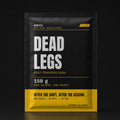
A built recovery soak. This is the ANVIL lane. DEAD LEGS is a recovery soak dosed with real menthol. The cooling comes up about three minutes in and reads clean over the heat. That cool is a sensation, not a painkiller, and the difference matters. It carries a sharp eucalyptus and peppermint scent that makes the soak feel like the end of the shift. And the sachet does one quiet thing plain water can't. It's a commitment device: you bought the box, so you do the soak. Working recovery and athlete recovery are the same idea pointed at different bodies. If you want the sports version, what athletes soak in covers it.
Start here: ANVIL DEAD LEGS, the recovery soak. One box, $14. Any basin or bucket works. Not sure DEAD LEGS is your soak? The 60-second soak quiz points you to the right one for how your feet actually feel.
After you step out
Pat your feet dry. Don't rinse. If your heels are rough or cracked, work a thick cream in now, while the skin's still soft and the pores are open. A proper foot cream is coming. When it lands, this is where it slots in. Then put on dry socks, not the sweated-through pair from today. Clean, dry feet going into the evening is half of why you feel human again.
That's the whole thing. Tomorrow is another ten hours on the same floor, in the same boots, and the soak doesn't change that. What it changes is where you start from. You begin tomorrow with feet that got a break tonight, instead of feet still carrying today. Do it two or three nights a week, and that adds up to a lot of days you don't start behind.
Questions guys actually ask
Hot or cold water for sore feet? Hot for the everyday kind: tired and stiff after a long shift. Heat loosens tissue and gets blood moving, which is what end-of-day feet want. Go cold only for a fresh, angry flare-up. Think a rolled ankle in the first day or two, when you're trying to calm swelling down. One flag: if your feet are swollen and stay that way, or one is bigger than the other, skip the soak. See a doctor. That can be a medical thing, and hot water won't sort it.
Is it OK to soak your feet every day? Yes. A fifteen-minute hot soak is gentle. Daily is fine if that's what gets you to sit down. Two or three nights a week is plenty for most guys, saved for the days that earned it.
Can I just use a bucket? Yes. Any bucket or basin that fits both feet and holds water to the ankle does the job. A deep bucket actually beats a shallow tub, because it covers more of the foot. A basin built for it is coming if you want one, but you don't need to wait.
How long before I feel anything? The heat registers in the first minute or two. With a menthol soak like DEAD LEGS, the cooling comes up around the three-minute mark and sits there. The looser, lighter feeling in the feet builds over the full fifteen.